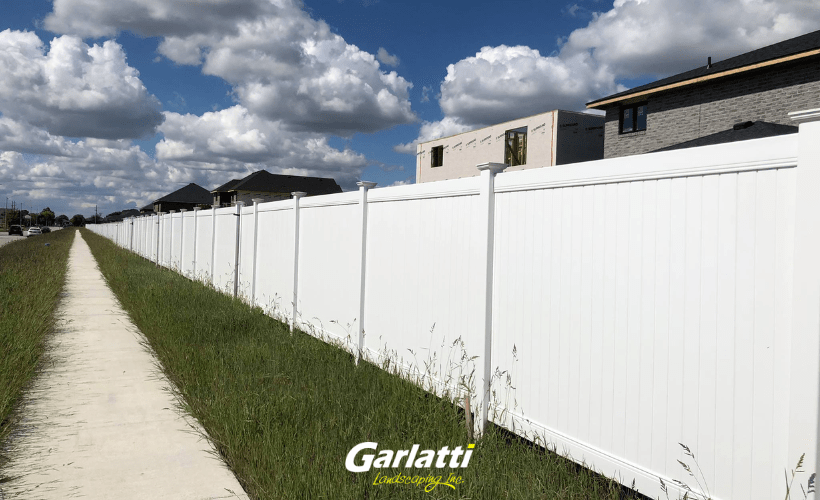
When it comes to fencing options for your home, two materials dominate the conversation: vinyl and wood. Vinyl vs. wood fences each bring real advantages — but also trade-offs that many homeowners don’t fully consider until after installation. Choosing the right fence means looking beyond price and comparing wood and vinyl fences on durability, maintenance, climate performance, and long-term value. This guide covers what vinyl fencing vs wood fencing actually costs, how each holds up in Windsor-Essex County’s climate, and which is the better fit for your property. Homeowners seeking a clear, honest comparison will find it here. Garlatti Landscaping has installed both fence types across Windsor-Essex County since 1990 and knows exactly what works in this region.
What Is Vinyl Fencing?
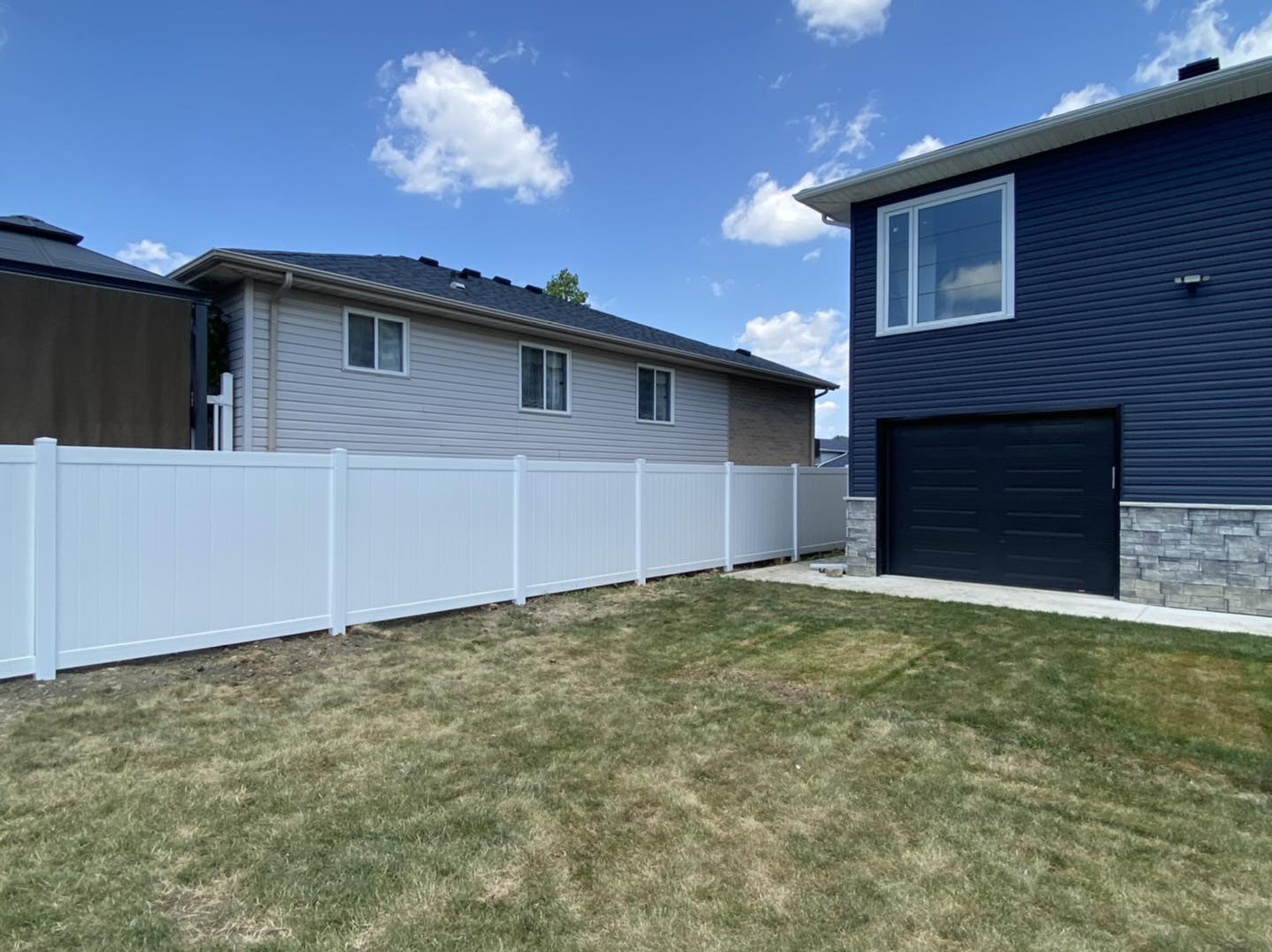
Vinyl fencing is made from polyvinyl chloride (PVC) — a tough, weather-resistant synthetic material that does not rot, warp, splinter, or absorb water. Vinyl fencing offers a wide range of styles, including privacy, picket, semi-privacy, and ranch rail. What makes vinyl fencing stand apart is that it requires almost no maintenance over its lifetime.
Modern vinyl comes in many colors — white, beige, gray, black, and realistic wood grain textures that are difficult to distinguish from natural wood. Fences come in many colors and styles today, making vinyl far more visually flexible than it was a decade ago. Solid vinyl panels with full privacy completely block sightlines. It is a popular choice for backyard enclosures across Windsor-Essex County. UV resistance in premium panels keep colors from fading under years of direct sun.
What Is Wood Fencing?
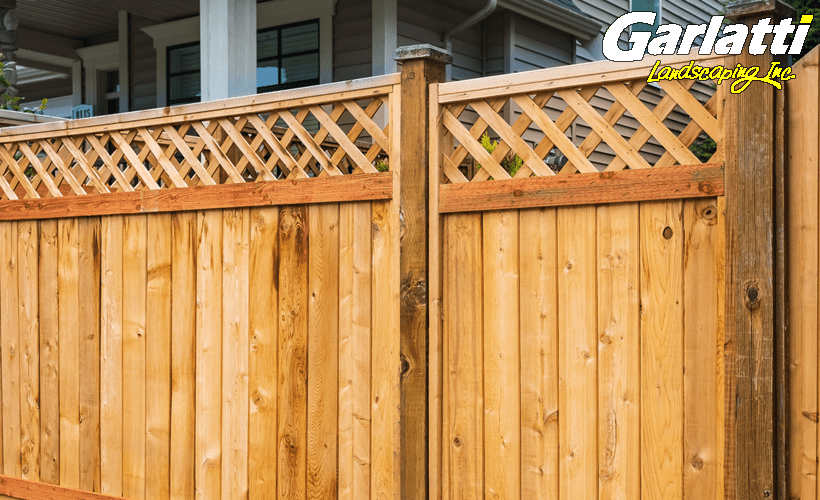
Wood fencing is among the most widely used materials for residential properties in Ontario. Cedar, redwood, and pressure-treated pine are the most common species installed locally. Cedar and redwood naturally resist rot and insect damage — well-suited for Windsor-Essex County’s humid summers. Pressure-treated pine is more affordable upfront, though it demands consistent upkeep to prevent warping and splitting.
Choosing between a wood fence and vinyl often comes down to appearance. Wood’s natural grain texture gives properties warmth and character that synthetic materials still struggle to replicate. It accepts paint or stain in any color, and individual boards can be cut and shaped to fit uneven yards or custom designs.
Durability and Lifespan
Vinyl fencing delivers long-term durability that wood cannot match in Ontario’s climate. Vinyl fences resist moisture at every level. Unlike wood, vinyl does not expand and contract with temperature shifts — posts and panels stay tight through years of freeze-thaw cycles.
A vinyl fence lasts longer than wood — typically 25 to 30 years with minimal upkeep, compared to 15 to 20 years for wood with proper care. Wood can last well over a decade when maintained consistently, but Ontario’s humidity and freeze-thaw cycles accelerate wood deterioration faster than in drier climates. Wood often develops cracked boards, loose fasteners, and rotting posts within the first ten years without consistent attention. Vinyl fencing continues to last a long time because moisture — the main cause of fence failure — never penetrates its surface.
Maintenance Requirements
Vinyl doesn’t need painting, staining, sealing, or sanding — not once, not ever. Cleaning with soap and water two or three times a year keeps it looking sharp. Using soap and water to maintain a vinyl fence takes about 30 minutes and a garden hose. Vinyl provides the kind of hassle-free ownership that Windsor-Essex homeowners genuinely appreciate.
Wood is a different story. Homeowners should plan on staining or painting every 2 to 3 years to prevent moisture damage and UV fading. Boards and posts in ground contact need annual checks for splitting, pest activity, and decay. Over a 20-year period, professional staining costs $3 to $8 per linear foot per application, and structural repairs add another $2 to $5 per foot annually — expenses that add up quickly across a full backyard fence.
Cost Comparison: Upfront vs. Long-Term
Wood fencing is cheaper to install. Ontario homeowners typically pay $22 to $28 CAD per linear foot for a professionally installed wood fence. Vinyl fencing does come with a higher upfront cost — $20 to $38 CAD per linear foot depending on style and quality.
The long-term value of your vinyl fence depends on factoring in every future expense. Vinyl is often the smarter financial decision over 20 years because it eliminates staining, painting, board replacement, and post repairs that make wood expensive over time. Vinyl may need minor hardware replacement after 15 to 20 years, but annual upkeep costs rarely exceed $0.50 to $1.00 per linear foot. A wood fence vs a vinyl fence over 20 years? Vinyl wins on total cost.
How Windsor-Essex Climate Affects Your Choice
Windsor-Essex County has four distinct seasons. Summers bring heat and high humidity. Winters deliver freezing temperatures and repeated freeze-thaw cycles. Usual Windsor area conditions that are unusually harsh on outdoor structures. Choosing between wood and vinyl fencing here is not the same decision as in a milder climate.
Wood absorbs moisture in every season. Summer humidity swells the wood fibers. Winter cold freezes any trapped moisture, expanding it from inside the boards and loosening fasteners at every joint. Ground-contact fence posts take the worst of it. Selecting the right fence for your property means accounting honestly for what these conditions do to wood — and the deterioration can be significant without proper protection. Vinyl fencing handles all of it without issue. It does not absorb water, so it stays stable through temperature swings, and will not crack under frost. For waterfront properties in Amherstburg, Lakeshore, and south Windsor, vinyl’s moisture resistance makes it the clear practical choice.
Aesthetic Appeal and Design Options
Wood still leads on design flexibility. Homeowners can choose custom heights and board widths, add decorative post caps, paint any color, and adjust layouts easily for slopes or unique yard shapes. Wood’s natural grain gives fences an organic, lived-in quality that many Windsor-Essex homeowners prefer — especially in established neighbourhoods with mature landscaping.
Modern vinyl fencing has closed the gap considerably, allowing homeowners to choose from privacy, semi-privacy, picket, and ranch rail styles in colors well beyond white. Wood-grain vinyl finishes are convincing enough that many neighbours won’t notice the difference. Vinyl maintains a clean, consistent look for decades without fading or warping.
Key Differences at a Glance
Here is how vinyl and wood compare on the factors Windsor-Essex homeowners care about most:
- Lifespan: Vinyl lasts 25–30 years; wood lasts 15–20 years with proper care
- Maintenance: Vinyl needs periodic washing only; wood requires staining, sealing, and annual inspection
- Upfront Cost (CAD): Vinyl runs $20–$38 per linear foot installed; wood runs $22–$28 per linear foot installed
- Long-Term Value: Vinyl costs less over 20+ years once maintenance is included
- Climate Performance: Vinyl resists freeze-thaw damage, humidity, and pests; wood needs consistent care to survive Ontario winters
- Design Flexibility: Wood offers more customization; vinyl offers low-maintenance, consistent appearance
- Repairs: Wood allows single board replacement; vinyl typically requires replacing entire panels
Which Fence Is Right for You?
Wood is the better fit if you want a lower upfront cost, enjoy maintaining your property, and want full control over design. Cedar is the best species choice for Windsor-Essex County — maintain it consistently and it will serve your property well for 15 or more years.
To choose vinyl is to invest in long-term value with minimal effort. Choose the best fencing material for your property by asking one question: how much time and money are you willing to spend on upkeep over the next 20 years? If the answer is “as little as possible,” vinyl is the right call. Garlatti Landscaping installs both fence types across LaSalle, Windsor, Amherstburg, Lakeshore, and Essex County, helping homeowners make this decision with a clear picture of costs, climate, and property needs.
Make the Right Fence Decision for Your Home
Vinyl vs. wood fences come down to a straightforward trade-off: wood costs less upfront and offers more design flexibility; vinyl costs more initially but delivers lower maintenance, superior durability over time, and stronger performance in Windsor-Essex County’s climate. Both fences provide real value the right choice depends on your goals, your timeline, and how much upkeep you are willing to take on.

Garlatti Landscaping has served Windsor-Essex County homeowners since 1990. Their team installs vinyl and wood fences built to last through Ontario winters and humid summers. Contact Garlatti Landscaping at 519-734-0444 or visit our contact page for a free consultation.



Share This Article
Choose Your Platform: Facebook Twitter Google Plus Linkedin